
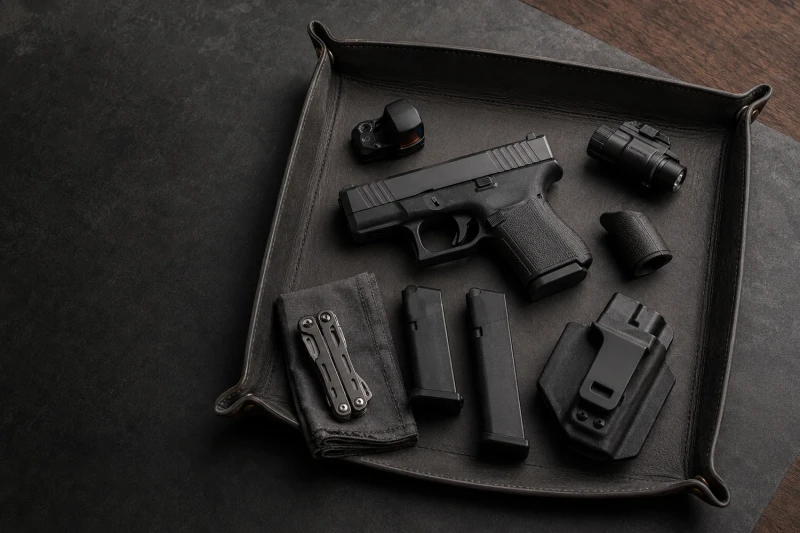
Buying the pistol is the easy part. The customers who end up genuinely well-equipped are the ones who understand that a carry gun is a system — pistol, optic, holster, light, sights, ammunition, and the training that ties it together. Here is how we build one at the counter, in the order that actually matters.
The quick answer: spend your money on the pistol, the holster, and training first. The optic comes next. Everything after that is refinement.
Step 1: Start with the pistol
Everything downstream is determined by this choice, so get it right. The two things that matter most are whether you can shoot it well and whether you will actually carry it every day. A pistol left in the safe because it is uncomfortable protects nobody.
Buy an optics-ready slide even if you do not want a red dot yet. Having the cut costs almost nothing at purchase and costs a few hundred dollars in milling later. Every pistol below is optics ready.
Sig Sauer P365 XL
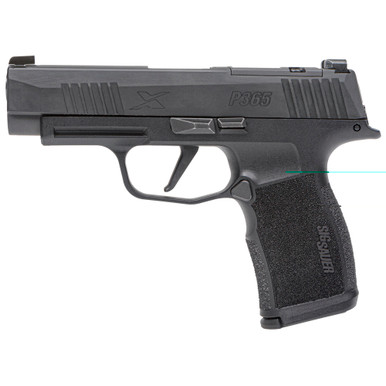
9mm · 3.7" barrel · striker-fired · optics-ready
The P365 reset the category and the XL is the sweet spot of the family: a slide long enough to shoot like a compact, a grip that still hides under a t-shirt, and Sig's XSeries flat trigger. The extra sight radius over the standard P365 pays off at any distance past across-the-room. This is the pistol our customers ask for by name more than any other.
See current pricing and availability »
Glock 43X M.O.S.

9mm · 3.41" barrel · slimline · optics-ready
An inch wide, Glock reliable, and cut for a red dot from the factory. The 43X carries flatter against the body than almost anything with comparable capacity, and the aftermarket around it is the deepest of any carry pistol in existence — holsters, sights, triggers, magazine extensions, all of it available immediately and from a dozen makers.
See current pricing and availability »
Springfield Hellcat Pro OSP
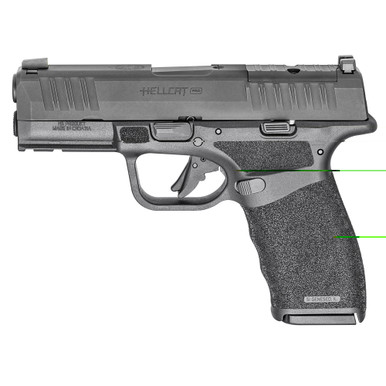
9mm · 3.7" barrel · striker-fired · optics-ready
The Hellcat Pro gives you a real grip — the thing most micro-nines sacrifice — without adding meaningful width. The 3.7" barrel puts it in the same class as the P365 XL, the OSP slide takes a micro red dot directly, and the factory sights are usable enough that you are not forced into an optic on day one. The pistol most people shoot best out of this group.
See current pricing and availability »
Smith & Wesson M&P Shield Plus
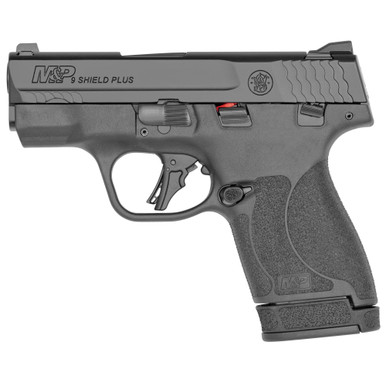
9mm · 3.1" barrel · striker-fired · flat-face trigger
The Shield created the modern single-stack carry category and the Plus brought it into the double-stack era without growing the outline. The flat-face trigger is one of the better factory triggers in this size class, and the grip texture is aggressive enough to hold onto without shredding a cover garment.
See current pricing and availability »
Sig Sauer P365-XMACRO
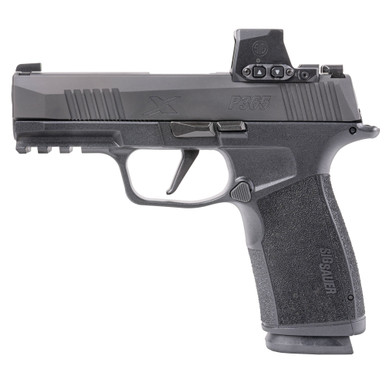
9mm · 3.7" barrel · integrated compensator · ships with Romeo-X optic
The XMACRO takes the P365 platform and adds an integrated compensator and a wider grip module without meaningfully increasing the carry footprint. This configuration ships with the Romeo-X already mounted and zeroed, which removes the single biggest friction point in a red dot build — you are carrying a complete optic-equipped pistol the day you leave the counter.
See current pricing and availability »
Smith & Wesson Bodyguard 2.0
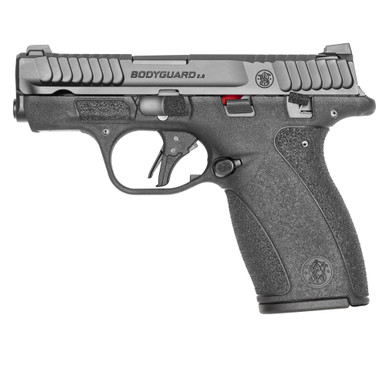
380 ACP · 2.75" barrel · micro-compact · flat trigger
The deep-concealment answer. Smith & Wesson rebuilt its micro .380 from scratch with a flat trigger, sights you can actually use, and a grip that makes a pocket pistol genuinely shootable. This is the gun for the days when nothing larger will conceal — and the gun people buy as a second pistol once they realize their primary does not fit every outfit.
See current pricing and availability »
Step 2: The holster
This is where most people underspend and regret it. A bad holster is the single most common reason a carry gun ends up in a drawer.
What you are looking for: a rigid mouth that stays open for one-handed reholstering, full trigger guard coverage, adjustable ride height and cant, and a wide, stable belt attachment. Kydex or a Kydex-leather hybrid for most people. If you are running an optic or a light, the holster must be cut for that exact combination — a holster pressing on your red dot will eventually shift your zero.
Then buy a real gun belt. A stiff, purpose-built belt does more for all-day carry comfort than any other single purchase, because it distributes the weight instead of letting the holster sag and print. Browse holsters and pouches and holders.
Step 3: The optic
A red dot lets you keep your focus on the threat instead of splitting it between rear notch, front post, and target. First-shot accuracy improves, low-light shooting improves, and shooters with aging eyes often improve dramatically.
Three things to get right:
Footprint. Shield RMSc is the standard for slim carry pistols; RMR footprint is standard on larger slides. Confirm which your slide is cut for before you order.
Enclosed versus open emitter. Enclosed designs keep lint, rain, and sweat off the emitter — a real advantage on a gun carried against the body all day. They cost more and sit slightly taller.
Backup iron sights. Suppressor-height sights that co-witness through the window give you an aiming system when the battery dies or the lens fogs. Carrying a dot with no irons is carrying a single point of failure.
Then commit to the learning curve. The dot will feel slower for the first few hundred draws. Browse dots and reflex sights and gun sights.
Step 4: The light
You are responsible for every round, which means you must identify your target before you fire. A weapon light is not optional equipment on a home defense pistol, and it is worth considering on a carry gun.
Look for a light sized to your slide's rail, with enough output to identify a person across a room without washing out the space, and a switch you can run with your existing grip. Remember the holster has to fit the light too — buy them together. Browse weapon lights.
Carry a handheld light regardless. It handles the ninety percent of situations where you need to see something but should not be pointing a gun at it.
Step 5: Trigger and controls
Modern factory triggers are good enough that this is genuinely optional. If yours has excessive travel or a mushy break, a quality drop-in kit tightens it up. Two rules: keep the pull weight sensible for a defensive pistol, and have the work done by someone who knows the platform.
Extended magazine releases and slide stops are worth more than most people expect if your hands are small enough that you have to break grip to reach the factory controls.
Step 6: Magazines and ammunition
Buy at least five magazines. Two go in the carry rotation, the rest go to the range and get marked so you can retire one when it starts causing malfunctions. Magazines are consumable parts, not permanent ones. Browse magazines.
For carry ammunition, pick a quality defensive load from a major manufacturer and then shoot at least a box of the exact load you carry through the exact gun you carry. Not a similar load. That one box is what proves the system functions.
Step 7: Training
This is the part that returns the most and gets skipped the most. A shooter with a plain factory pistol and real training will outperform someone carrying a fully accessorized gun they have never drawn from the holster.
Dry practice at home builds your drawstroke for free. Live fire confirms it. Structured instruction fixes the things you cannot see yourself doing. Our Marlton location runs the New Jersey Permit to Carry course, so you can qualify and get coaching from the same people who sold you the pistol.
Where to spend first
If the budget is limited, this is the order:
1. The pistol and a quality holster and belt. Non-negotiable. This is the system that gets you carrying every day.
2. Ammunition and training. A few hundred rounds and a class beats every accessory on this page.
3. The red dot and backup sights. The largest capability upgrade available, once the fundamentals are in place.
4. The weapon light. Essential if the gun does double duty at home.
5. Trigger, controls, and cosmetics. Last, and genuinely optional.
Frequently asked questions
Do I need a red dot on a carry gun?
Need, no. Most people shoot better with one after they put in the practice, and shooters over forty often see the biggest gain. But a dot on top of an inconsistent drawstroke will make you slower, not faster. Get the fundamentals and the holster right first.
What is the best caliber for concealed carry?
9mm for most people. It offers the best balance of manageable recoil, capacity, and affordable practice ammunition — and practice ammunition cost directly determines how much you train. .380 ACP makes sense when the pistol has to be small enough that 9mm is not practical.
Should I carry appendix or strong side?
Both work. Appendix conceals better on most body types and puts the gun where both hands can reach it, but requires deliberate attention to reholstering. Strong-side hip is more forgiving and often more comfortable seated. Try both with a quality holster before deciding.
How often should I replace my carry ammunition?
Rotate rounds that have been repeatedly chambered and unloaded, since repeated chambering can set the bullet back into the case. A practical habit is shooting your carry load once or twice a year and replacing it — which doubles as confirmation that the gun still runs it.
Can I buy one of these online?
Yes — order on our site and pick up at our Marlton or Jersey City locations with no transfer fee, or have it shipped to a licensed dealer near you. See our guide to buying a gun online for the full process.
Building a carry setup is the kind of thing that goes much faster across a counter than through a search bar. Come see us at Urban Tactical Firearms in Marlton or Jersey City — we will fit the holster, mount the optic, and get you on the schedule for the permit course.